WebAssembly outside the browser: what the component model actually is
WebAssembly modules are portable but awkward to connect. The component model adds typed interfaces so modules written in different languages can talk to each other.
WebAssembly started as a way to run fast code in the browser. Increasingly, it's showing up on servers, at the edge and inside plugins. The piece that makes that practical is the component model.
Modules vs. components
A core Wasm module only understands numbers: integers and floats. Passing a string means agreeing on a memory layout, writing bytes into linear memory and handing over a pointer and a length. Every language toolchain did this differently.
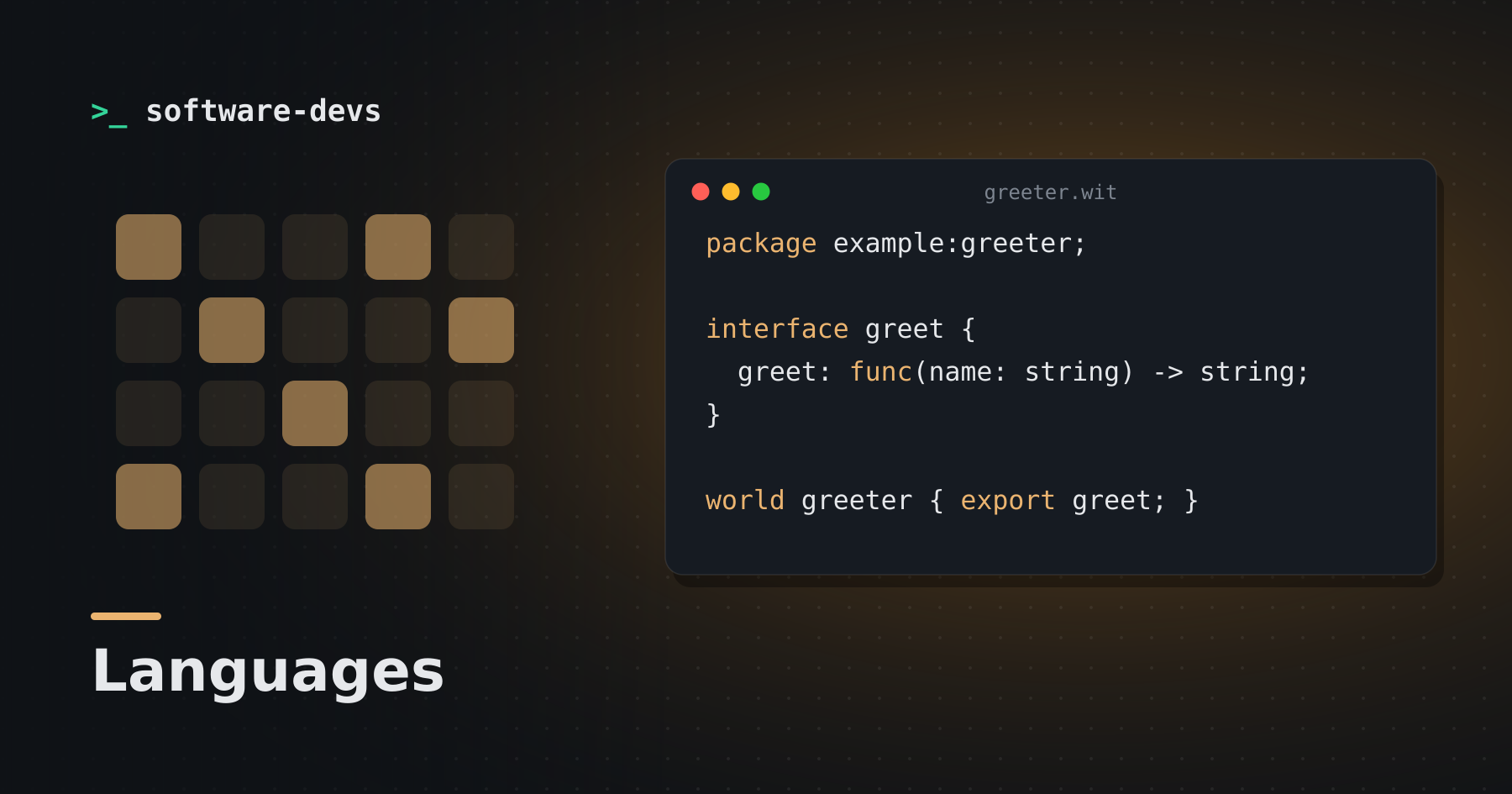
A component wraps a module with a typed interface described in WIT (Wasm Interface Type):
package example:greeter;

interface greet {
  greet: func(name: string) -> string;
}

world greeter {
  export greet;
}
Tooling generates the glue code on both sides, so a component written in Rust can call one written in Go or Python without either knowing the other's memory layout.
Why developers care
- Plugins without the risk. Components are sandboxed by default and only get the capabilities they're handed.
- Polyglot libraries. Write a parser once, use it from any language with a Wasm runtime.
- Small, fast cold starts. A natural fit for serverless and edge functions.
Trying it
cargo install cargo-component
cargo component new greeter --lib
cargo component build --release
The ecosystem is still settling, but the core idea — typed, sandboxed, language-neutral components — is solid enough to start experimenting with today.