Rust's ownership model, explained for developers coming from garbage-collected languages
Ownership and borrowing are why Rust needs no garbage collector. Three rules, a few examples, and the mental model that makes the borrow checker click.
If you come from Ruby, Python, Java or JavaScript, memory just… works. Rust gets the same safety without a garbage collector by checking, at compile time, who owns each value.
The three rules
- Every value has exactly one owner.
- When the owner goes out of scope, the value is dropped.
- You can have either one mutable reference or any number of immutable references — never both at once.
Moves
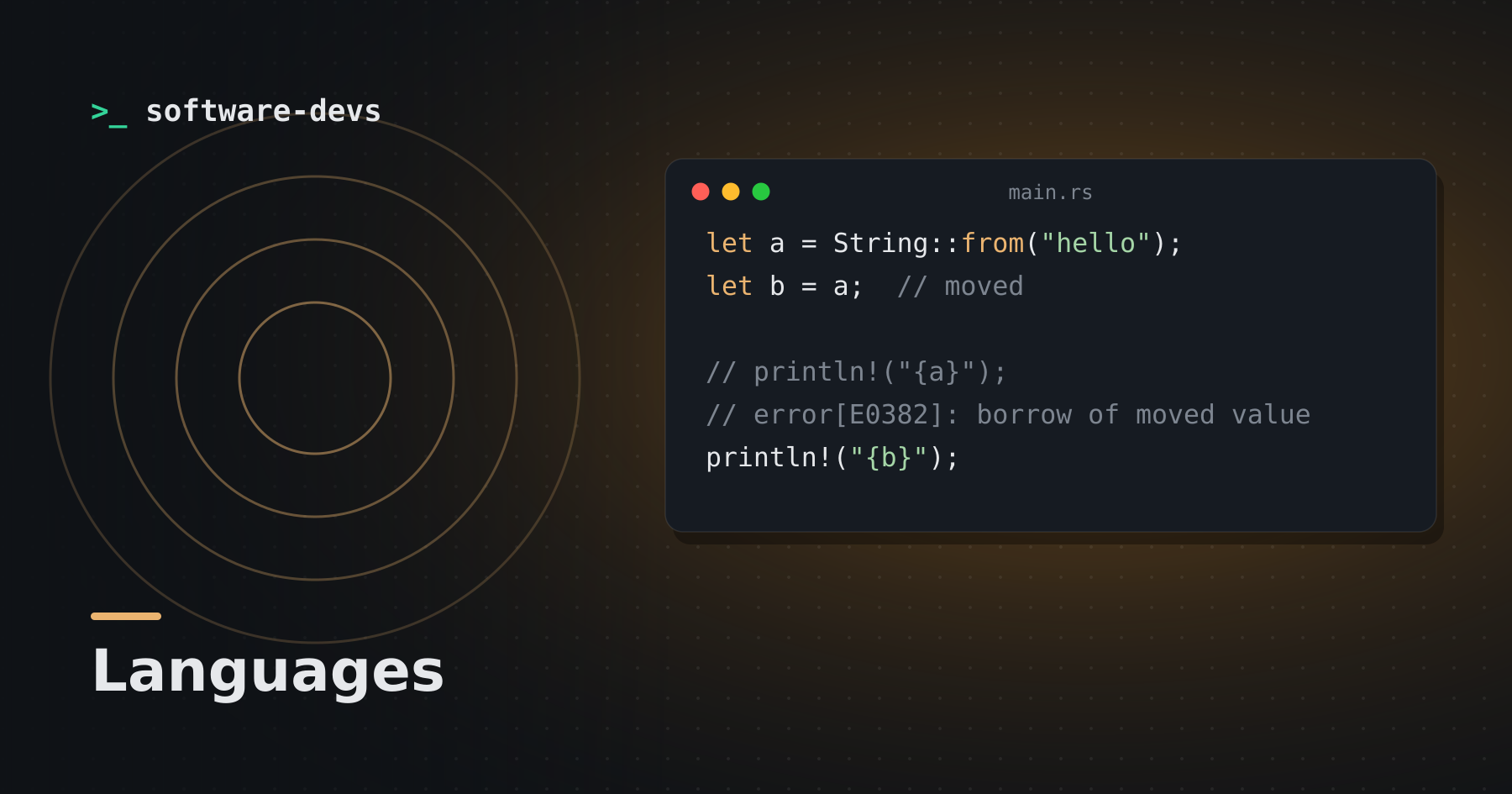
let a = String::from("hello");
let b = a;           // ownership moves to b
// println!("{a}");  // compile error: a was moved
println!("{b}");
Assigning a heap value moves it. This is how Rust guarantees there's exactly one place responsible for freeing it.
Borrowing
Most of the time you don't want to give a value away — you want to lend it:
fn length(s: &String) -> usize {
    s.len()
}

let name = String::from("ferris");
let n = length(&name); // borrow
println!("{name} has {n} letters"); // still usable
Why rule three matters
Shared mutable state is the root of data races and iterator-invalidation bugs. By forbidding mutation while something else is reading, Rust rules out a whole class of bugs before the program runs.
The mental model
Think of the borrow checker as a code reviewer who insists on one question: who is responsible for this data right now? Once you design your code to answer that clearly, the fights with the compiler mostly stop.