Gradual typing in practice: adding types to a large dynamic codebase
You don't have to type everything at once. A step-by-step strategy for introducing type checking to an existing project without stopping feature work.
Python, Ruby and JavaScript all have optional type systems now. Starting a new project with types is easy. Adding them to a 200,000-line codebase is a different problem.
Start at the edges
Types pay off most at boundaries: public APIs, service clients, serialization code. Annotating those first gives every caller better autocomplete and error checking.
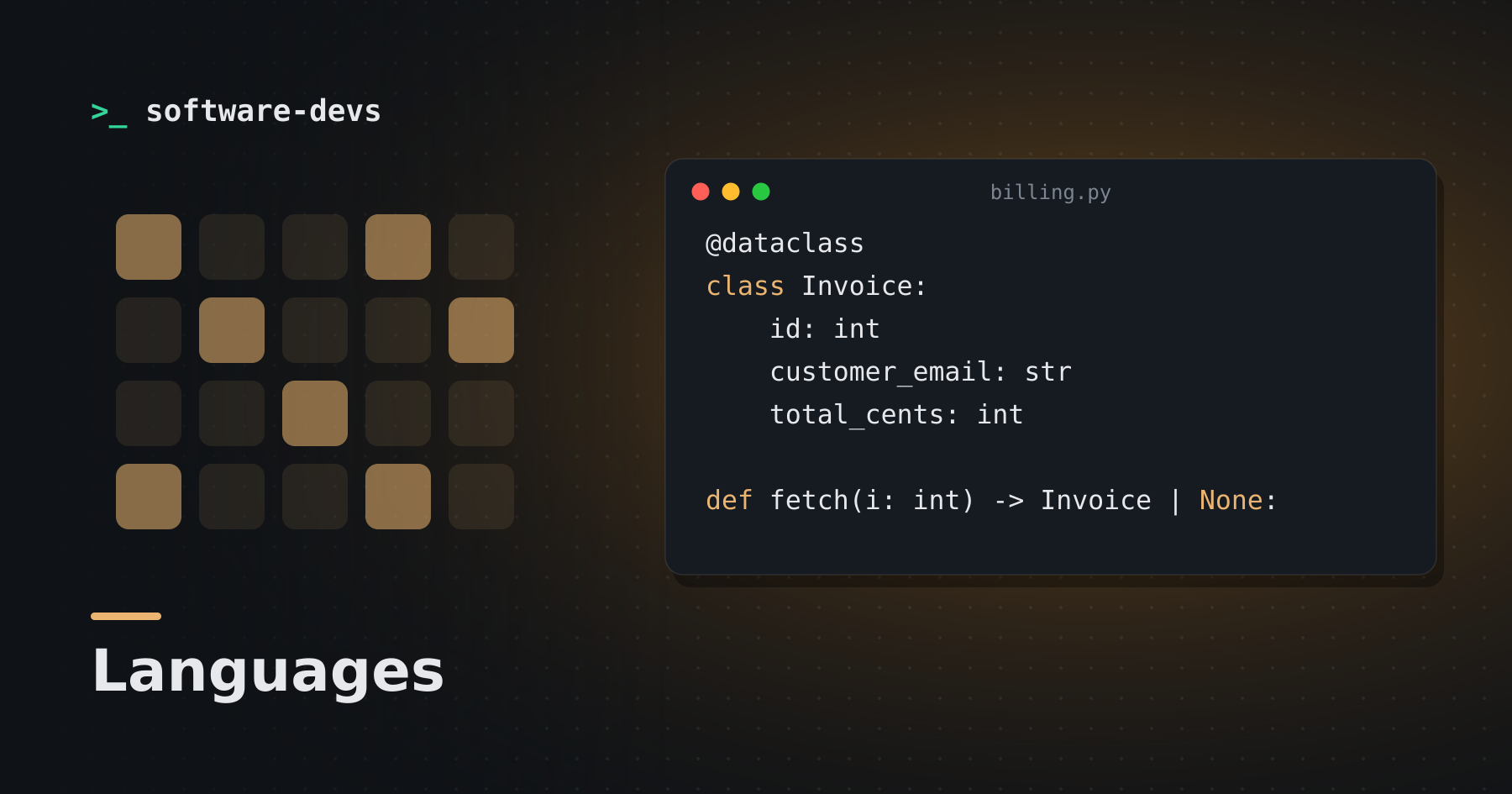
from dataclasses import dataclass

@dataclass
class Invoice:
    id: int
    customer_email: str
    total_cents: int

def fetch_invoice(invoice_id: int) -> Invoice | None:
    ...
Ratchet, don't mandate
- Turn the checker on in permissive mode for the whole project.
- Enable strict mode per-directory as each area gets cleaned up.
- Add a CI check that new files must pass strict mode.
- Track the number of untyped files over time and make it go down.
// tsconfig.json — tighten gradually
{
  "compilerOptions": {
    "allowJs": true,
    "checkJs": false,
    "strict": true
  },
  "include": ["src/billing/**/*", "src/api/**/*"]
}
Avoid the escape-hatch trap
any (or Any) silences the checker — and spreads. Prefer unknown plus a type guard, and lint for new any usages.
What you get
Fewer "undefined is not a function" bugs in production, safer refactors, and onboarding docs that can't go stale: the types are the documentation.