Threads, actors and channels: a guide to concurrency models
Languages offer very different tools for doing many things at once. Each model makes certain bugs impossible and others easy.
Concurrency is about structuring a program to handle many things at once. How a language lets you express that determines which bugs you'll fight.
Shared memory and locks
Threads share memory; mutexes protect it. Available almost everywhere.
- Pro: flexible and fast when done right.
- Con: data races and deadlocks. Forget a lock and you get corrupted data; take locks in different orders and threads wait on each other forever.
Communicating sequential processes (channels)
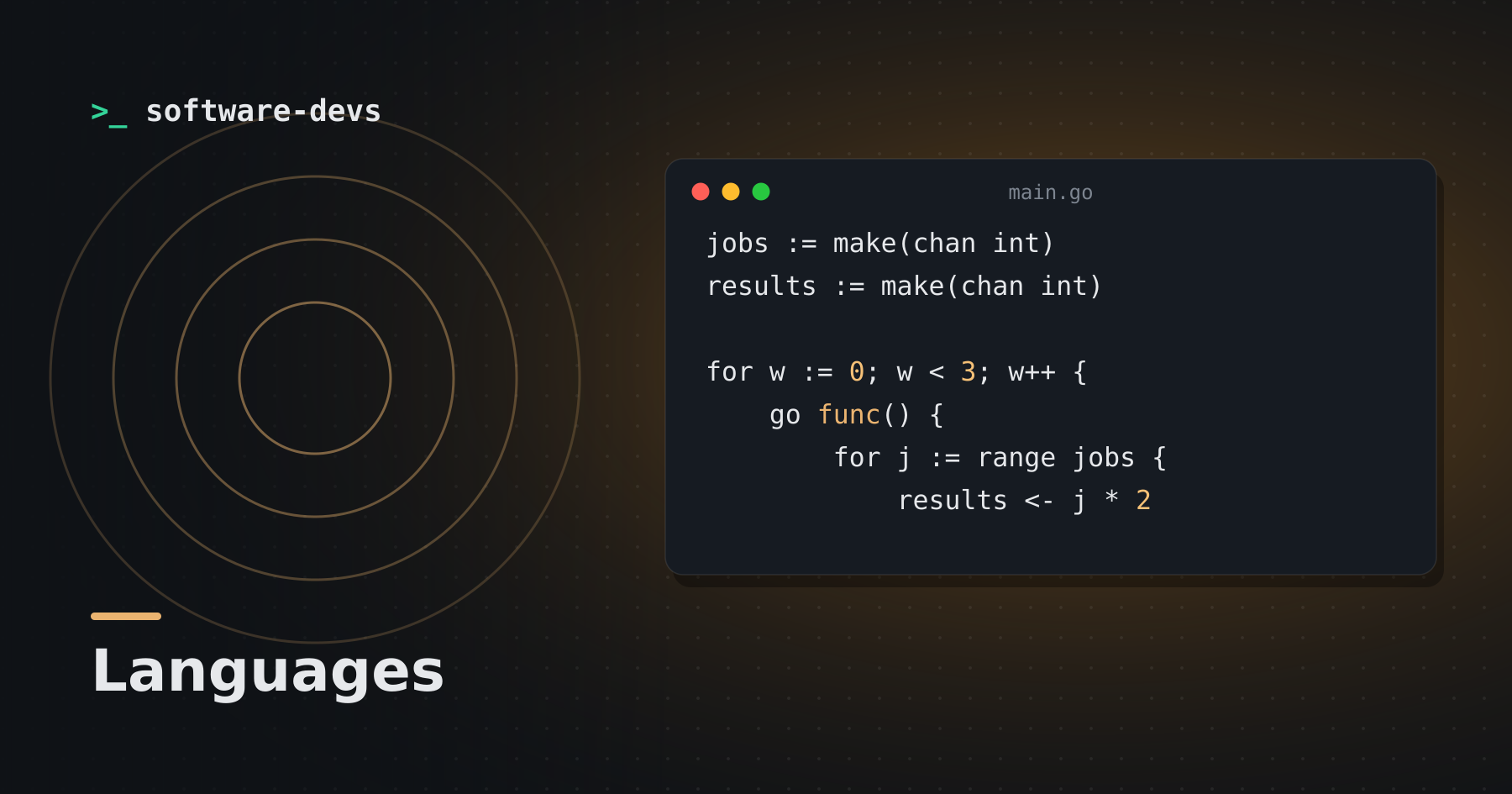
Independent tasks communicate by sending messages over channels instead of sharing variables. Go's goroutines are the best-known example:
jobs := make(chan int)
results := make(chan int)

for w := 0; w < 3; w++ {
    go func() {
        for j := range jobs {
            results <- j * 2
        }
    }()
}
"Don't communicate by sharing memory; share memory by communicating."
Actors
Each actor has private state and a mailbox. Actors process one message at a time and talk only by sending messages. Erlang and Elixir build on this, with supervisors that restart failed actors:
send(pid, {:charge, order_id})

receive do
  {:charged, ^order_id} -> :ok
after
  5_000 -> :timeout
end
Because state isn't shared, there are no data races between actors.
Async tasks
Cooperative tasks on an event loop — async/await — handle huge numbers of concurrent I/O operations on few threads, but CPU-bound work blocks everything.
Ownership-checked threads
Rust's type system tracks which data can be shared or sent between threads, so most data races are compile errors rather than production incidents.
Choosing
| Model | Great for |
|---|---|
| Locks | Small critical sections, performance-sensitive code |
| Channels | Pipelines, worker pools |
| Actors | Fault-tolerant systems with lots of independent state |
| Async | High-concurrency I/O |
Most real systems mix models. The goal is the same: make it hard for two things to touch the same data at the same time without meaning to.