Structured logging: making logs you can actually query
Free-form log lines are easy to write and painful to search. Emitting events with consistent fields turns logs into data.
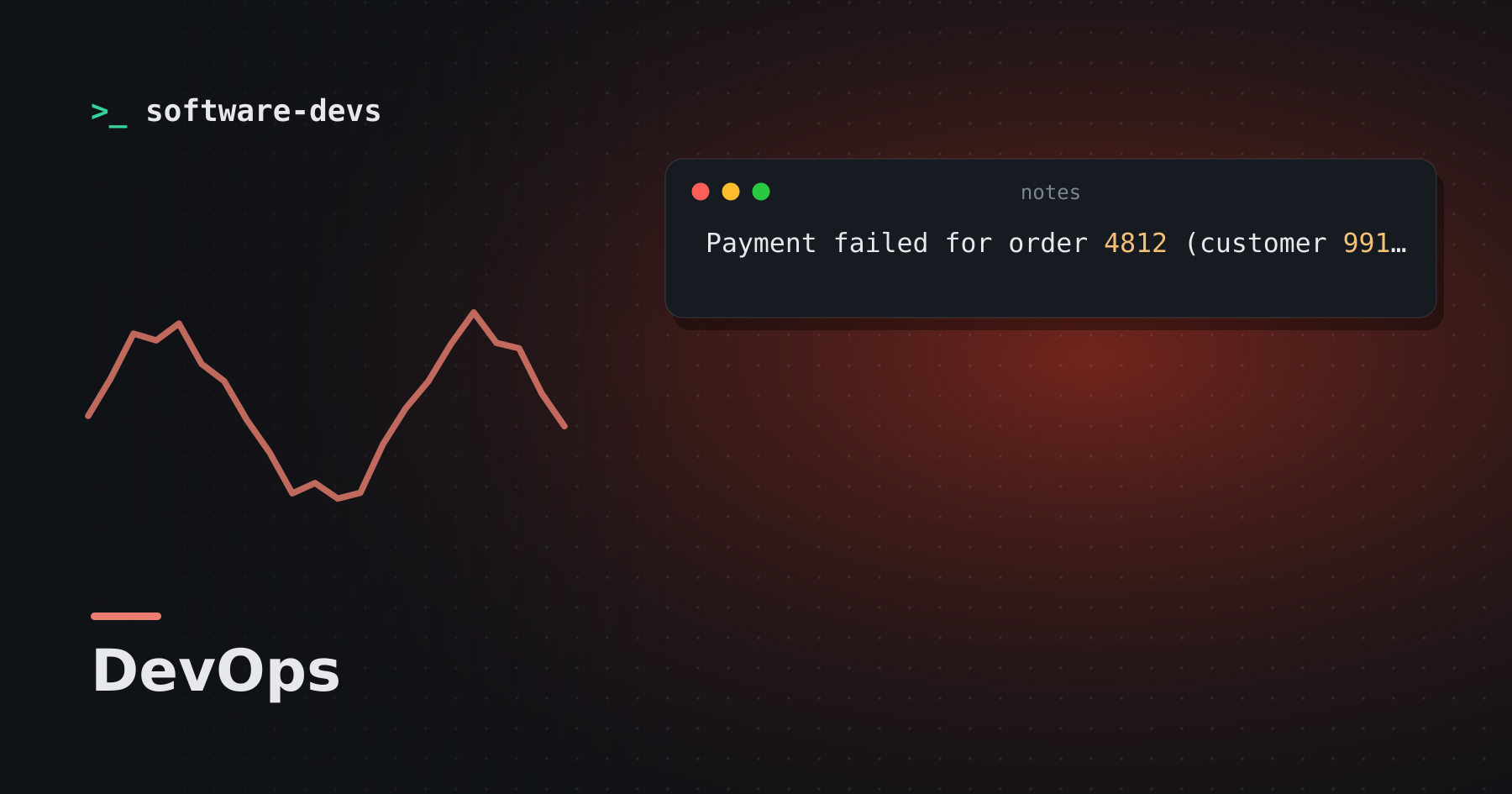
During an incident, you need answers like "how many payment failures did customer 4812 hit in the last hour?" With free-form text logs, that's a fragile regex. With structured logs, it's a query.
Text vs. structure
Payment failed for order 4812 (customer 991) after 1873ms: card_declined
versus
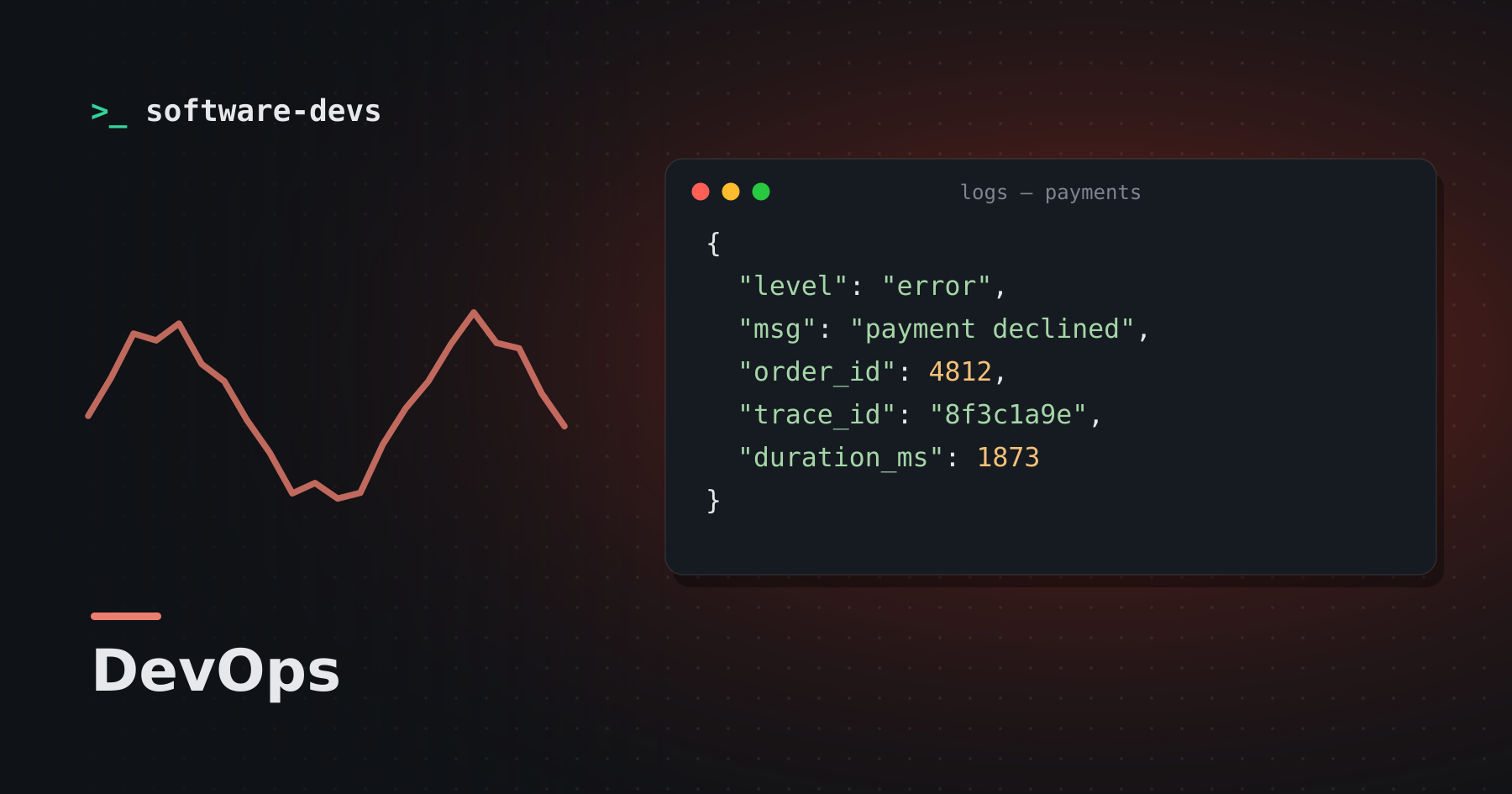
logger.info(
    "payment.failed",
    order_id=4812,
    customer_id=991,
    duration_ms=1873,
    reason="card_declined",
    request_id=request.id,
)
The second becomes a JSON object your log platform can index, filter and aggregate.
Conventions that pay off
- Stable event names:
payment.failed, not a sentence that changes with every edit. - Consistent field names across services: pick
user_idonce and use it everywhere. - Units in names:
duration_ms,size_bytes. - Correlation IDs: include a request or trace ID on every line so you can follow one request across services.
- Levels that mean something:
errorshould be actionable, not just "unexpected."
Add context once
Most logging libraries support context that's attached automatically — request ID, user ID, tenant — so individual log calls stay short and nothing gets forgotten.
What not to log
- Passwords, tokens, API keys and session cookies.
- Full payment card numbers or other regulated data.
- Large request bodies by default — they're expensive to store and often contain personal data.
Use an allow-list of loggable parameters, or a filter that redacts known sensitive keys.
Cost control
Logs can become one of your largest infrastructure bills. Sample noisy debug events, drop health-check logs and set retention per level: errors for months, debug for days.
Logs, metrics and traces
Structured logs are the detailed record. Counting events is cheaper with metrics, and following a request across services is easier with traces. Shared IDs tie all three together.