Infrastructure as code: what belongs in it, and what doesn't
Declaring infrastructure in version control makes it reviewable and repeatable. It also has sharp edges — state, secrets and drift.
Infrastructure as code (IaC) means describing servers, networks, DNS and databases in files instead of clicking through a cloud console. The files live in git, changes go through review, and environments can be recreated from scratch.
The core loop
Most declarative tools follow the same pattern:
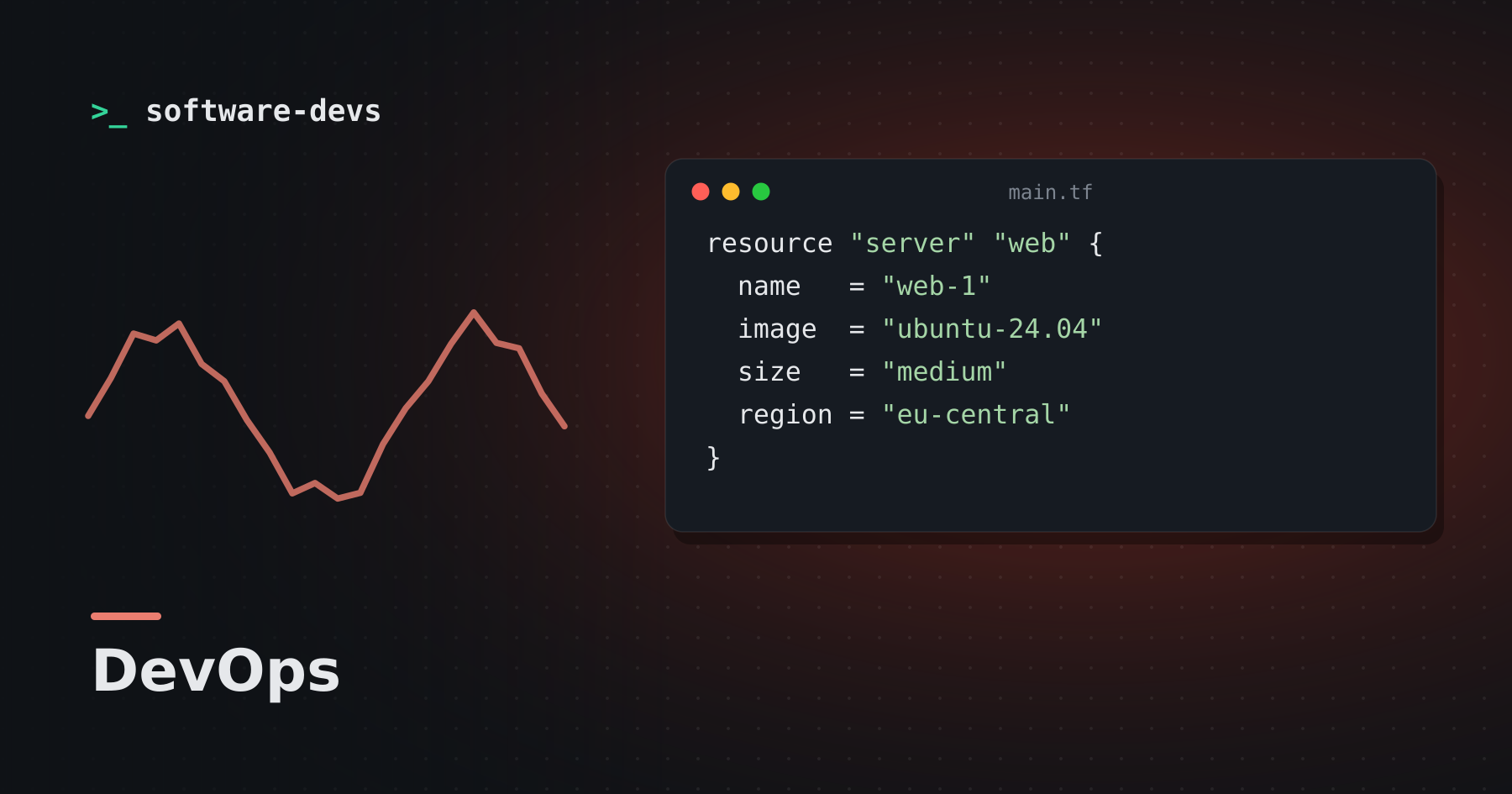
resource "server" "web" {
  name   = "web-1"
  image  = "ubuntu-24.04"
  size   = "medium"
  region = "eu-central"
}

resource "firewall_rule" "https" {
  server = server.web.id
  port   = 443
}
- Plan: compare the files with what exists and show a diff.
- Review: a human reads the plan in the pull request.
- Apply: the tool makes reality match the files.
Reading the plan is the most important step. "1 to destroy" on your production database should never be a surprise.
What belongs in IaC
- Networks, firewalls, load balancers and DNS
- Servers, managed databases and buckets
- IAM roles and permissions
- Monitoring and alert definitions
What doesn't
- Secrets. Reference them from a secrets manager; don't commit values.
- Application deploys. Shipping a new version of your app every hour is a deploy tool's job, not an infrastructure change.
- Data. IaC creates the database; migrations and backups manage what's inside.
The sharp edges
State. Tools track what they created in a state file. Store it remotely with locking, back it up and never edit it by hand.
Drift. Someone "just quickly" changes a setting in the console, and the files no longer describe reality. Run plans on a schedule to detect drift, and lock down console write access in production.
Blast radius. One giant configuration means every change risks everything. Split by environment and by lifecycle — networking changes rarely, app servers change often.
Start small
You don't need to codify everything on day one. Start with DNS and one environment. Once changes reliably go through review, expand. The goal isn't perfect coverage — it's never having to wonder how production was configured.