Your dependencies are your attack surface: a supply-chain security checklist
Most of the code you ship, you didn't write. A short, practical checklist for keeping third-party packages from becoming your next incident.
A typical web application pulls in hundreds of transitive dependencies. Each one is code that runs with your app's permissions. Supply-chain attacks target exactly that trust.
The checklist
1. Commit your lockfile
Gemfile.lock, package-lock.json, Cargo.lock, uv.lock — commit them all. Builds should install exactly what you tested, not whatever was published five minutes ago.
2. Audit continuously
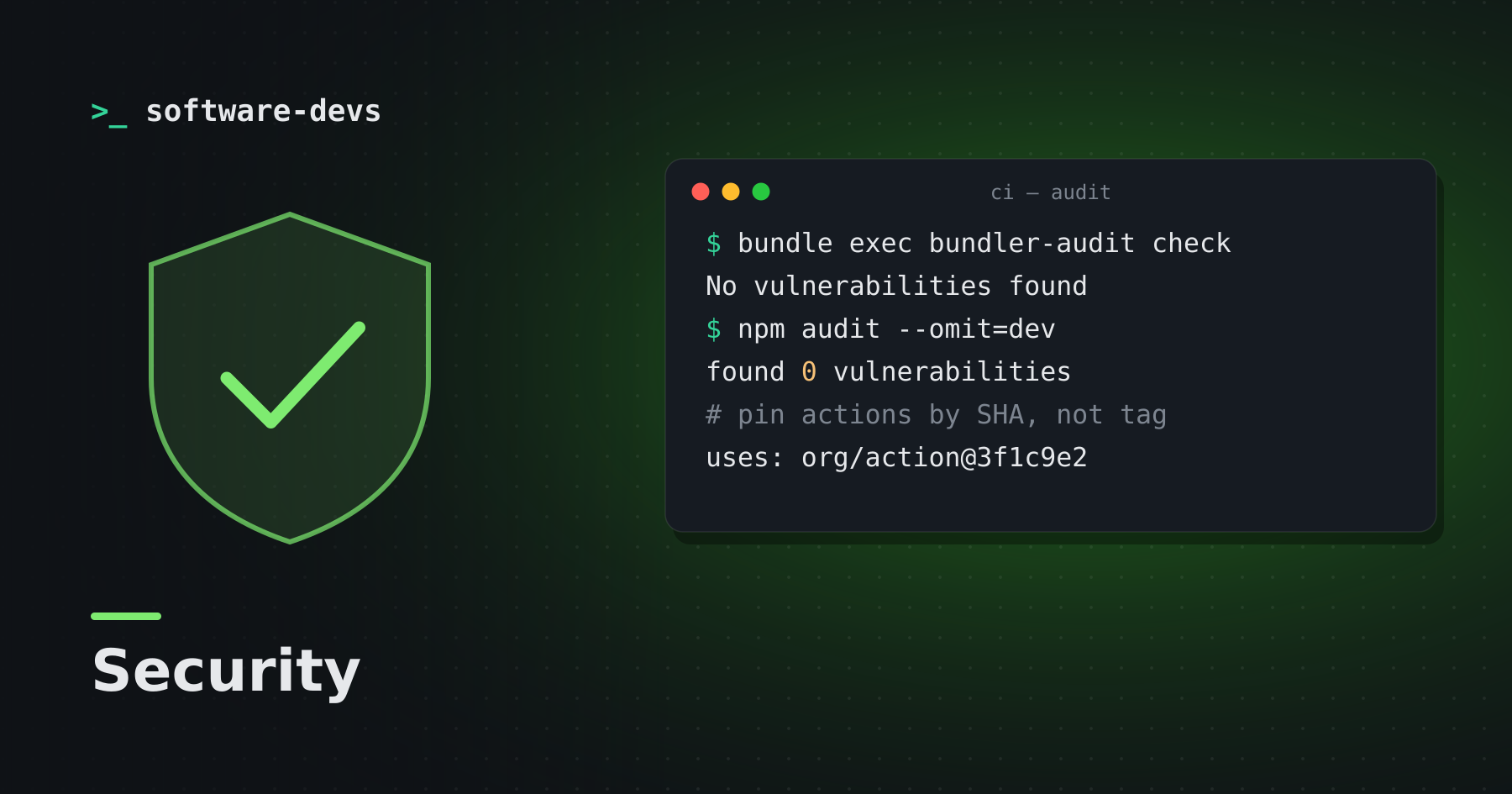
Run an advisory scanner in CI on every pull request, not just once a quarter.
bundle exec bundler-audit check --update
npm audit --omit=dev
3. Be suspicious of install scripts
Packages that execute code at install time deserve extra scrutiny. Many package managers let you disable install scripts by default and allow-list the few that need them.
4. Watch for typosquats
reqeusts is not requests. Review new dependencies in code review like any other change: who maintains it, how old is it, how many downloads?
5. Pin your CI actions
Reference third-party CI actions by commit SHA, not a mutable tag. A tag can be moved; a SHA can't.
6. Minimize what ships
Multi-stage Docker builds keep compilers and dev dependencies out of production images. Less code shipped means less code to exploit.
The mindset
You can't review every line of every dependency. You can control what gets in, keep it current, and limit what it can reach.