SQL injection is still here. Parameterized queries still fix it
One of the oldest web vulnerabilities keeps showing up in new code. The fix has been known for decades — here's how to apply it everywhere, including the places ORMs don't cover.
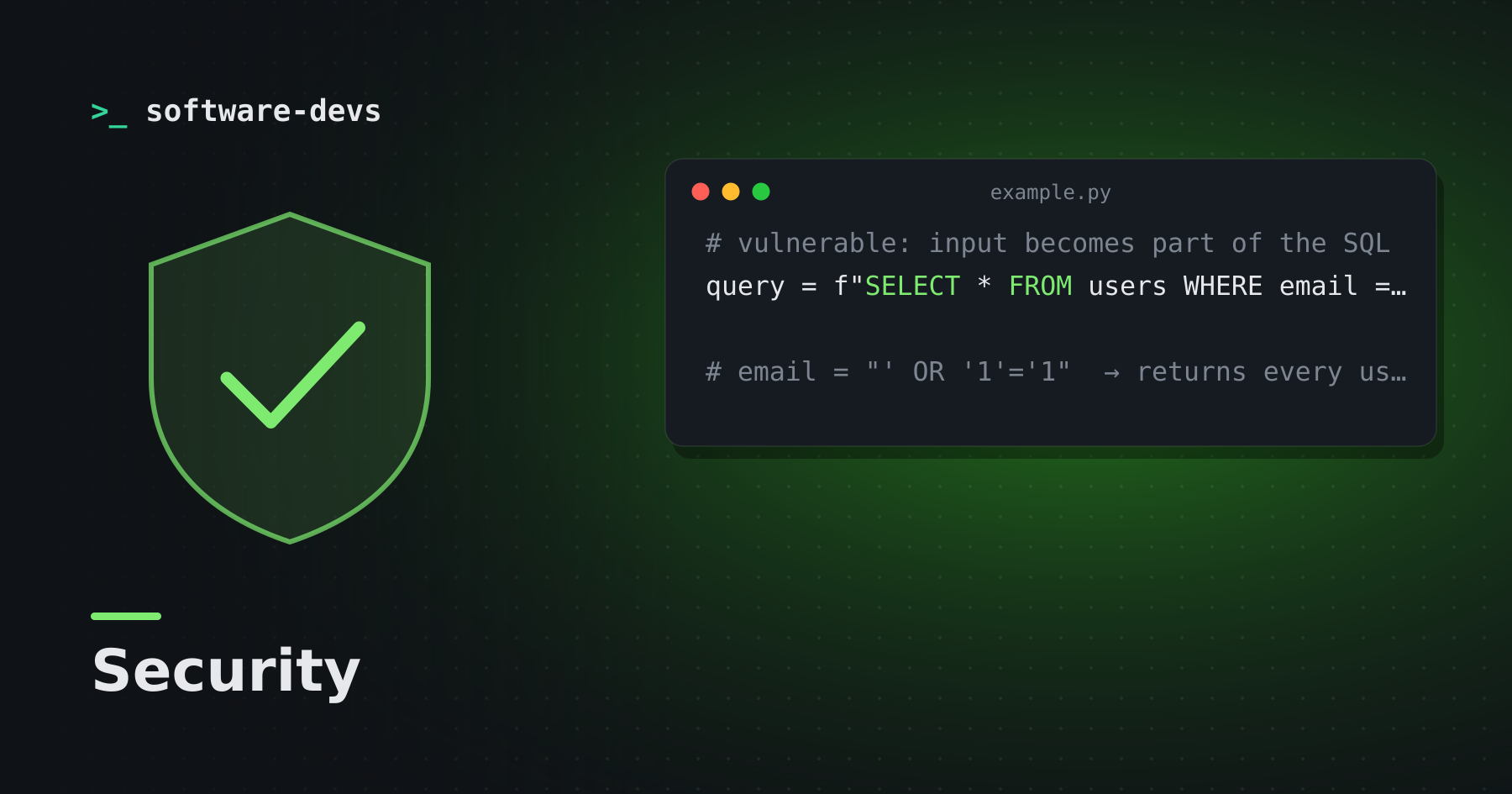
SQL injection happens when user input is pasted into a SQL string and the database interprets part of it as code. It's decades old, well understood and still regularly found in production applications.
The bug
# vulnerable: input becomes part of the SQL
query = f"SELECT * FROM users WHERE email = '{email}'"

# email = "' OR '1'='1"  → returns every user
Depending on the database and permissions, an attacker can read other users' data, bypass logins, modify records or worse.
The fix: parameters
Send the query and the values separately. The database treats parameters as data, never as SQL:
cursor.execute("SELECT * FROM users WHERE email = %s", (email,))
Every mainstream database driver and ORM supports this. With ORMs, the standard query methods parameterize for you:
User.where(email: params[:email])            # safe
User.where("email = ?", params[:email])      # safe
User.where("email = '#{params[:email]}'")    # vulnerable
Where injection still sneaks in
- Raw SQL fragments in ORMs: string interpolation inside
where,orderorselectcalls. - Dynamic column or table names, which can't be parameterized. Validate them against an allow-list.
ORDER BYfrom query parameters: map user choices like"newest"to fixed SQL instead of passing column names through.LIKEpatterns: parameterize the value and escape%and_if users shouldn't use wildcards.- Stored procedures that build dynamic SQL internally.
Defense in depth
- Connect with a database user that has only the permissions the app needs.
- Use static analysis tools that flag string-built queries.
- Log and alert on database errors, which often spike during injection attempts.
The rule
User input never becomes SQL syntax. If you find yourself concatenating strings into a query, stop and parameterize — or allow-list.