HTTP caching, properly: Cache-Control, ETags and what browsers actually do
The fastest request is the one that never reaches your server. A practical guide to the headers that control browser and CDN caching.
HTTP has a powerful caching system built in. Used well, it makes sites faster and servers cheaper. Used badly, users see stale pages or nothing gets cached at all.
Cache-Control is the main lever
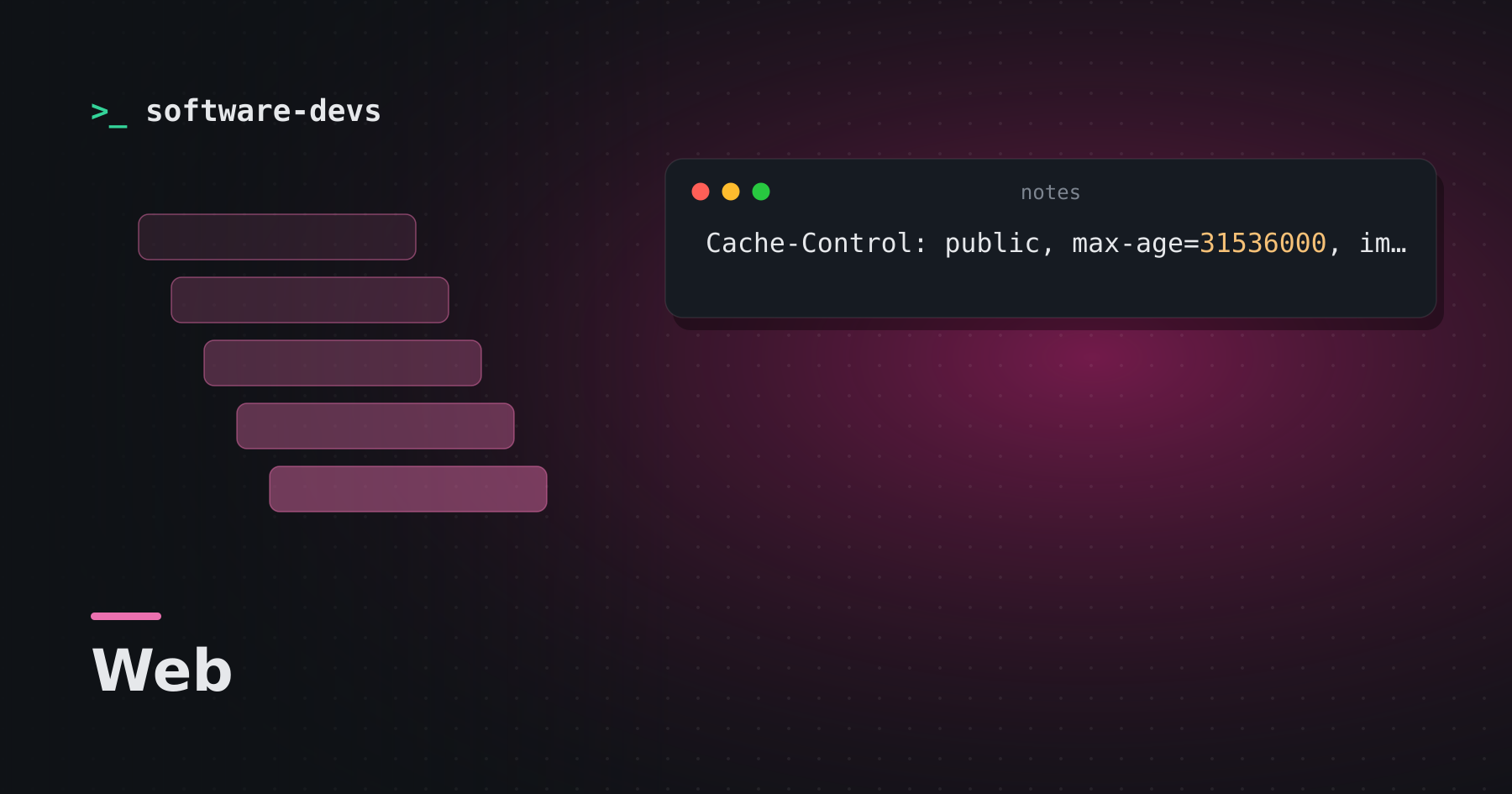
Cache-Control: public, max-age=31536000, immutable
max-age=N— the response is fresh for N seconds.public— shared caches (CDNs, proxies) may store it.private— only the user's browser may store it. Use for personalized pages.no-cache— store it, but revalidate with the server before every use.no-store— don't store it at all. Use for sensitive data.
no-cache does not mean "don't cache." It means "always check first."
Fingerprinted assets: cache forever
When asset filenames include a content hash (app-3f9a1c.css), a changed file gets a new URL. That means the old URL can be cached forever:
Cache-Control: public, max-age=31536000, immutable
HTML: revalidate
Pages change, so let browsers keep a copy but check whether it's still current. That's what validators are for.
ETags and conditional requests
HTTP/1.1 200 OK
ETag: "a7f3c9"
Cache-Control: no-cache

GET /articles/42
If-None-Match: "a7f3c9"

HTTP/1.1 304 Not Modified
A 304 has no body. The server still does some work — it must compute the ETag — but skips rendering and transferring the page. Many frameworks can short-circuit rendering entirely when the ETag matches.
CDNs
s-maxage sets freshness for shared caches only, so a CDN can cache for minutes while browsers revalidate every time:
Cache-Control: public, max-age=0, s-maxage=300
Common mistakes
- Caching personalized pages as
public— one user's page served to another. - Forgetting
Varywhen responses differ by header, such asAccept-EncodingorAccept-Language. - Long
max-ageon unfingerprinted URLs, leaving users stuck on old files.
A sane default
Fingerprinted assets: cache for a year. HTML: no-cache with ETags. Private data: private or no-store. Start there and tune with real traffic.