Full-text search without a search cluster
Before you add a dedicated search engine, check what your database already does. Postgres and SQLite both ship capable full-text search.
WHERE title LIKE '%deploy%' works for a prototype. It can't use a normal index, ignores word forms ("deploy" vs. "deploying") and has no notion of relevance. The usual next step is a separate search cluster. Often, your database is enough.
Postgres: tsvector and tsquery
Postgres converts text into a tsvector — normalized words called lexemes — and matches it against a tsquery.
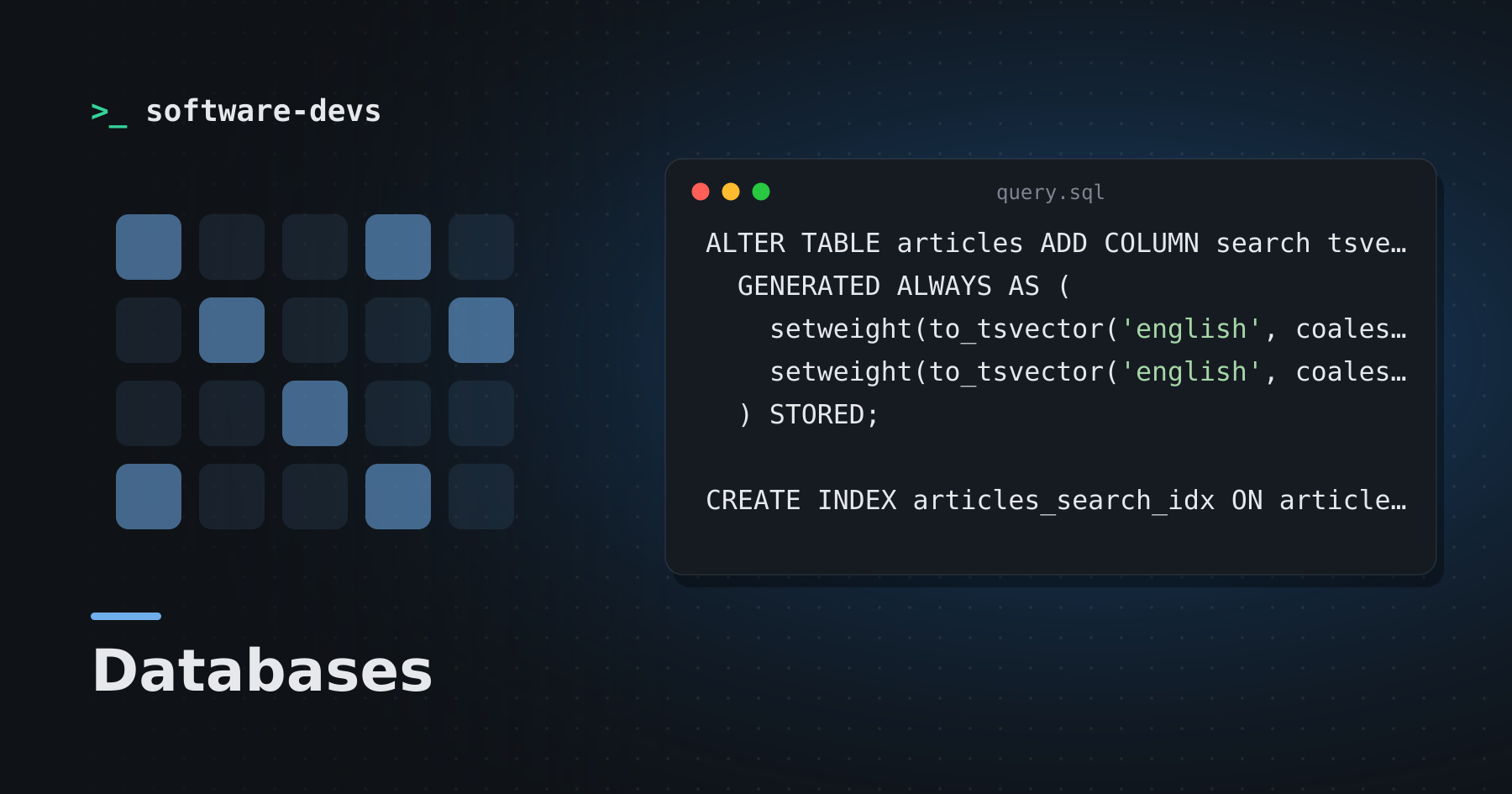
ALTER TABLE articles ADD COLUMN search tsvector
  GENERATED ALWAYS AS (
    setweight(to_tsvector('english', coalesce(title, '')), 'A') ||
    setweight(to_tsvector('english', coalesce(body, '')), 'B')
  ) STORED;

CREATE INDEX articles_search_idx ON articles USING gin (search);

SELECT title, ts_rank(search, q) AS rank
FROM articles, websearch_to_tsquery('english', 'deploy rails') q
WHERE search @@ q
ORDER BY rank DESC
LIMIT 20;
- Stemming: "deploying" matches "deploy".
- Weights: title matches rank above body matches.
websearch_to_tsqueryaccepts search-box syntax like quoted phrases and-exclude.
SQLite: FTS5
SQLite's FTS5 extension provides a virtual table with ranking built in:
CREATE VIRTUAL TABLE articles_fts USING fts5(title, body);

SELECT title FROM articles_fts
WHERE articles_fts MATCH 'deploy AND rails'
ORDER BY rank;
Keep it in sync with your main table using triggers, or rebuild it in a background job.
When to reach for a dedicated engine
- Typo tolerance and fuzzy matching as a core feature
- Faceted search across many attributes at large scale
- Search traffic heavy enough to warrant separate infrastructure
- Complex relevance tuning and multilingual analysis
Why start with the database
No extra service to run, no sync pipeline to break, and search results are always consistent with your data. For a blog, docs site, internal tool or modest product catalog, built-in full-text search is often all you'll ever need.