Seats, usage or open core? How developer tools make money
Understanding how your tools are funded helps you predict their future. A field guide to the common business models behind developer products.
The tools you build on have a business model, and that model shapes what gets built, what stays free and what might change. Knowing the common patterns helps you choose tools with your eyes open.
Per-seat pricing
You pay per developer per month. Common for editors, code hosting and collaboration tools.
- Predictable for buyers and sellers.
- Incentive: features that make each seat more valuable, plus admin controls large companies require.
Usage-based pricing
You pay for what you consume: build minutes, requests, gigabytes, tokens.
- Low barrier to start; costs scale with success.
- Risk: surprise bills. Look for spending caps and alerts before you commit.
Open core
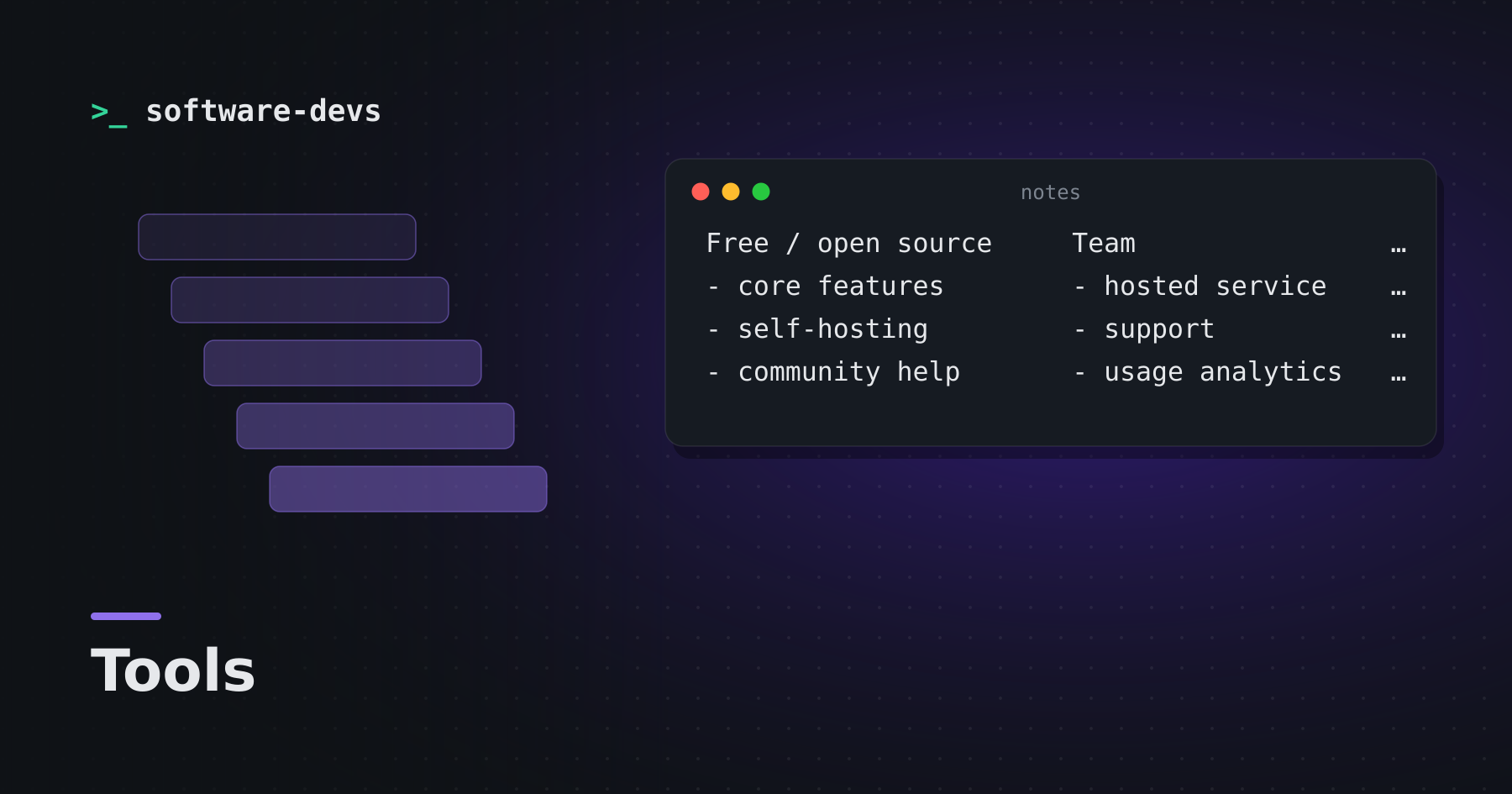
The core is open source; paid features target larger organizations.
Free / open source     Team                Enterprise
- core features        - hosted service    - SSO / SAML
- self-hosting         - support           - audit logs
- community help       - usage analytics   - compliance features
Single sign-on, audit logs and fine-grained permissions are classic paid features: individuals rarely need them, companies must have them.
Hosted open source
The software is fully open; the company sells running it for you — upgrades, backups, scaling and support.
Why it matters to you
- Free tiers are marketing. They're valuable, but limits can tighten. Know your exit path.
- Licenses can change. Several popular projects have moved from permissive to more restrictive licenses as companies looked for sustainable revenue. Check the license before you build a business on a tool.
- Self-hosting is leverage. If you can run it yourself, a pricing change is an inconvenience rather than an emergency.
- Pay for what you rely on. A tool you depend on whose company can't sustain itself is a long-term risk.
A simple test
Before adopting a tool, ask: who pays for this, and what happens to me if they stop? The answer doesn't have to be "nobody" — it just has to be one you're comfortable with.