Monorepo or polyrepo? The trade-offs, honestly
Whether to keep all your code in one repository or many is mostly a question of tooling and team structure. Neither is free.
Some organizations keep every project in a single repository; others give each service or library its own. Both approaches power successful companies. The right choice depends on what you're optimizing for.
The monorepo
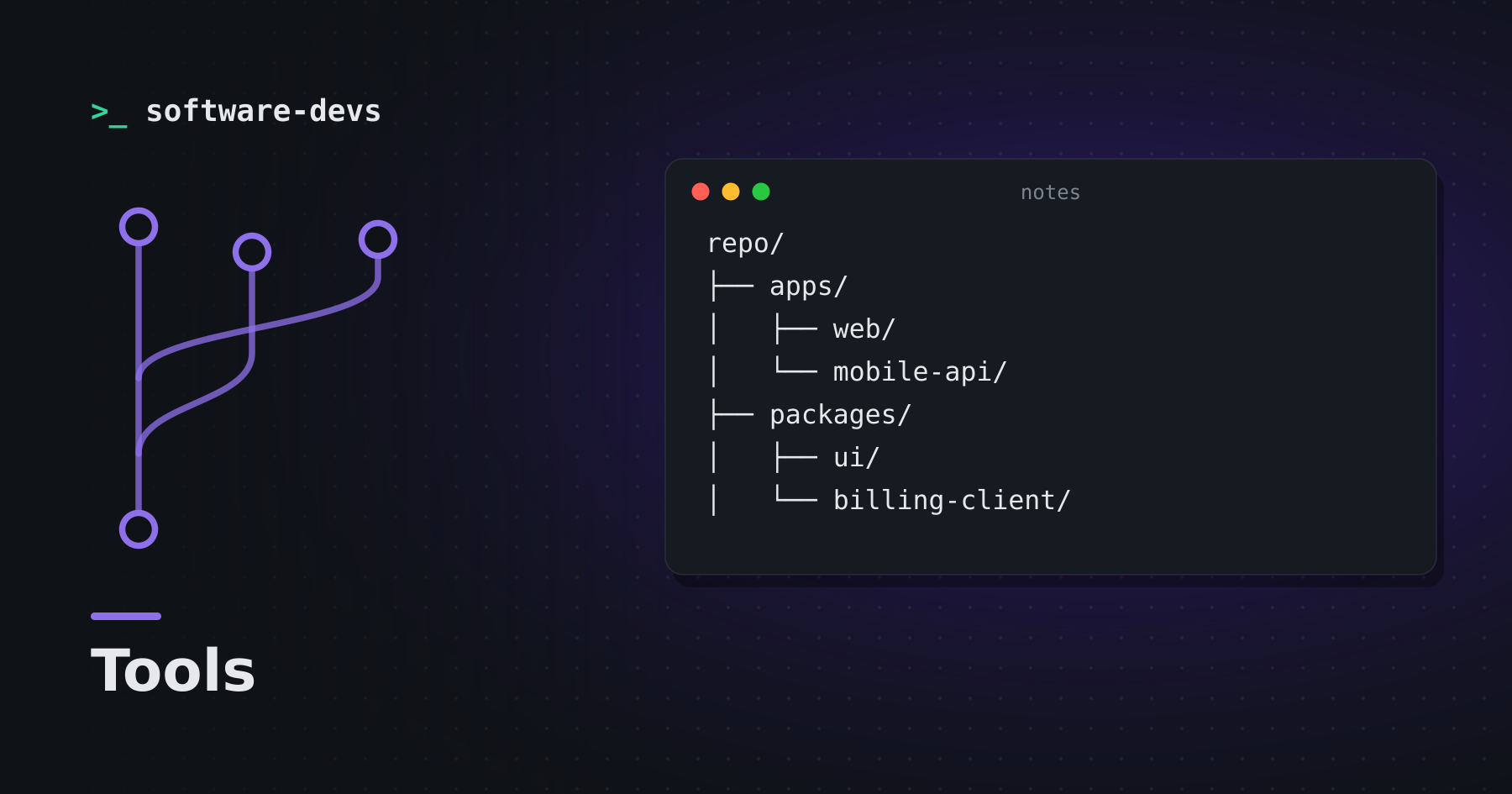
repo/
├── apps/
│   ├── web/
│   └── mobile-api/
├── packages/
│   ├── ui/
│   └── billing-client/
└── tools/
Strengths
- Atomic changes: update a shared library and all its callers in one pull request.
- One source of truth for tooling, linting and CI configuration.
- Easy code sharing and discoverability.
- No version juggling between internal packages.
Costs
- Tooling: builds and tests must be scoped to what changed, or CI grinds to a halt as the repo grows.
- Access control is coarser; restricting parts of a repo is harder.
- Git performance can degrade at very large sizes without extra tooling.
The polyrepo
Strengths
- Clear ownership and boundaries per repository.
- Independent release cycles and simpler, faster CI per project.
- Fine-grained permissions.
Costs
- Cross-cutting changes require coordinated pull requests across repositories.
- Dependency drift: services end up on different versions of shared libraries.
- Duplicated configuration for CI, linting and tooling.
How to decide
- Small team, tightly coupled code: a monorepo usually reduces friction.
- Many autonomous teams with stable interfaces: separate repositories may fit better.
- Shared libraries that change often: monorepos make that painless.
- Strict access requirements: polyrepos are simpler.
Hybrid is fine
Many organizations land somewhere in between: a monorepo for the main product, separate repositories for open-source libraries or infrastructure. Optimize for how your teams actually work, and revisit the decision as they grow.