Debugging methodically: treat bugs like experiments
Random changes and hopeful restarts waste hours. A scientific approach — reproduce, hypothesize, test, narrow — finds bugs faster.
When a bug is confusing, it's tempting to change things until it goes away. Sometimes that works. Often it burns an afternoon and leaves you unsure what fixed it. A methodical approach is faster on average, and it teaches you something every time.
1. Reproduce it reliably
You can't fix what you can't trigger. Find the smallest set of steps, inputs or data that makes the bug happen every time. Turn it into a failing automated test if you can — that test becomes proof of the fix later.
2. Gather facts
Read the actual error message and stack trace, all of it. Check logs around the time it happened. Note what changed recently: deploys, config, data, dependencies.
3. Form a hypothesis
State a specific, testable explanation: "The cache returns stale prices after a currency change." Vague hunches like "something's wrong with caching" can't be tested.
4. Test it — and change one thing at a time
Design an experiment that would prove the hypothesis wrong. Add a log line, write a test, toggle one setting. Changing several things at once makes results impossible to interpret.
5. Narrow the search space
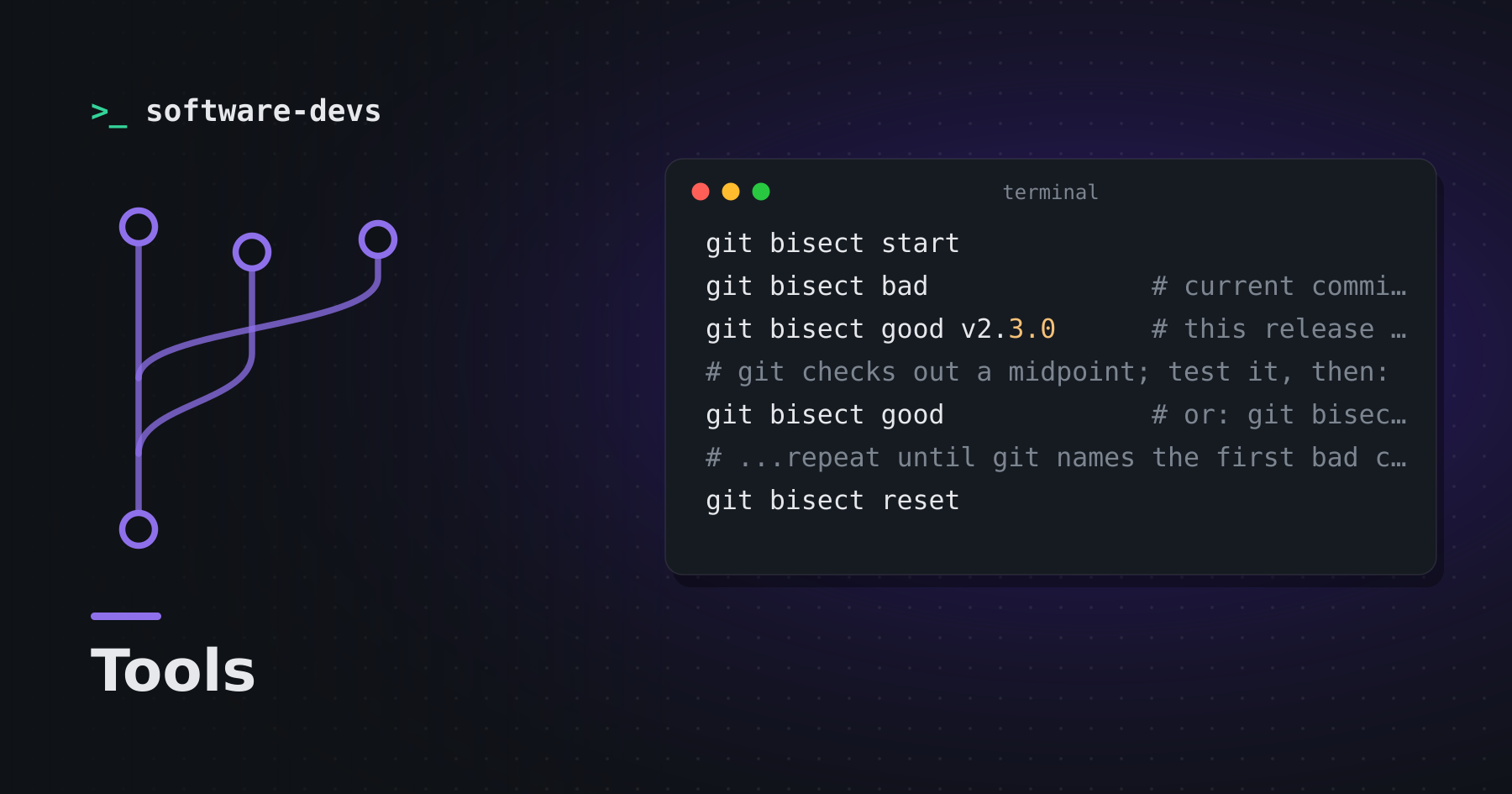
Binary search is the most powerful debugging tool there is:
git bisect start
git bisect bad              # current commit is broken
git bisect good v2.3.0      # this release worked
# git checks out a midpoint; test it, then:
git bisect good             # or: git bisect bad
# ...repeat until git names the first bad commit
git bisect reset
The same idea applies to code, data and configuration: cut the problem in half until only the cause remains.
6. Explain it
Describing the problem out loud — to a colleague or a rubber duck — forces you to state assumptions, and one of them is often wrong.
7. Fix the cause, then prevent it
Fix the root cause rather than the symptom, keep the failing test as a regression test, and ask whether the same mistake could exist elsewhere.
Take breaks
After an hour of going in circles, step away. A fresh perspective finds in minutes what a tired one misses for hours.