Writing a README people actually read
Your README is your project's front door. Answer the first three questions every visitor has, and keep the rest a click away.
Most visitors spend seconds on a README before deciding whether a project is worth their time. A good one answers their questions in the order they ask them.
The questions, in order
- What is this? One or two sentences, no jargon.
- Is it for me? What problem it solves and for whom.
- How do I try it? The shortest path to something working.
- Where do I learn more? Links to docs, examples and help.
A skeleton
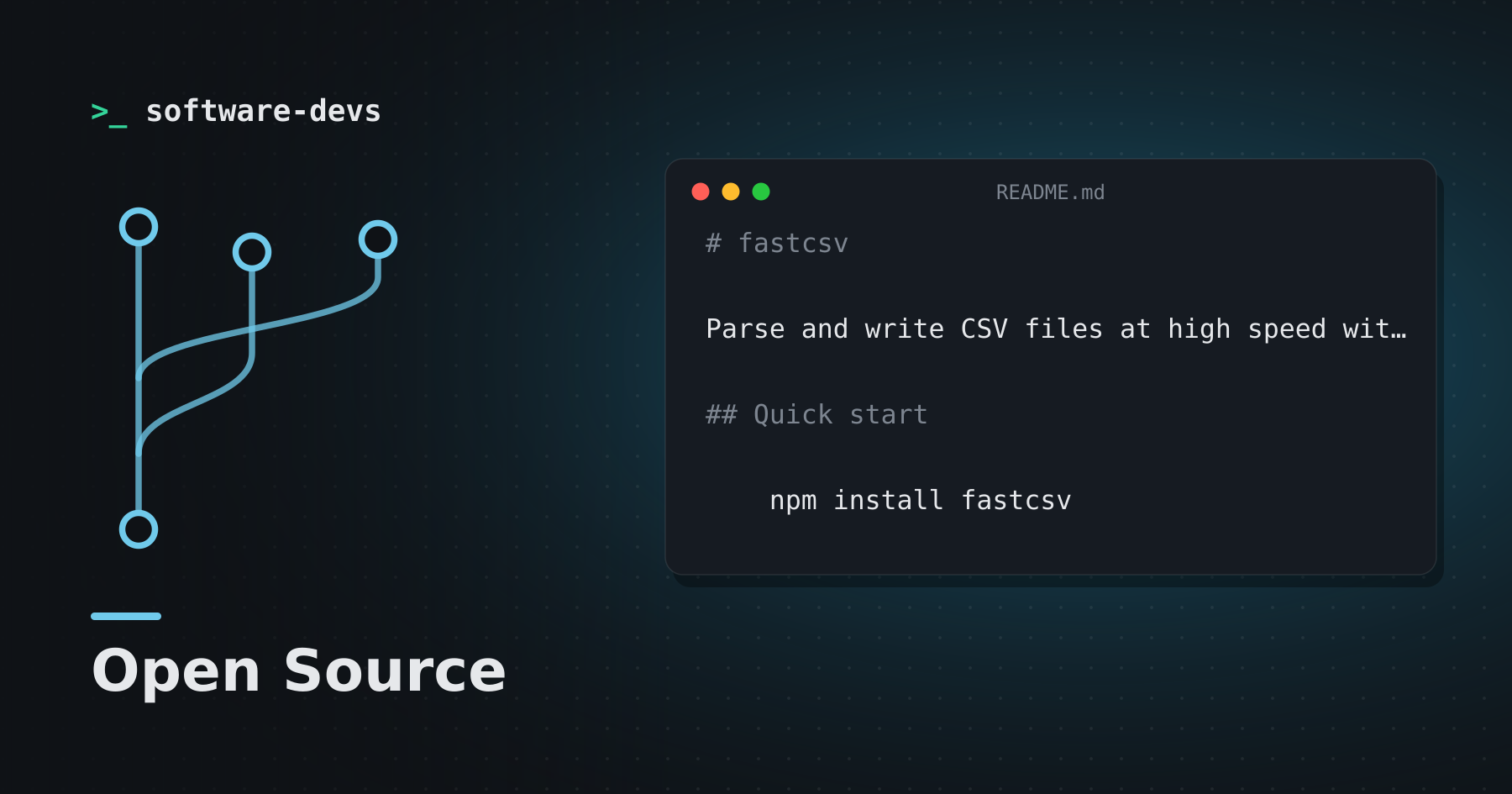
# fastcsv

Parse and write CSV files at high speed with a tiny API.

## Quick start

    npm install fastcsv

    import { parse } from "fastcsv";
    const rows = parse(text);

## Features
- Streams large files with constant memory
- Handles quoted fields and custom delimiters

## Documentation
Full guide and API reference: docs/

## Contributing
See CONTRIBUTING.md. Bug reports welcome!

## License
MIT
Make the quick start real
- Copy-pasteable commands that work on a clean machine.
- The minimum code that produces a visible result.
- Test it regularly — or better, test it in CI.
A broken quick start costs you more users than a missing feature.
Show, don't tell
A short code example, screenshot or terminal recording communicates more than a paragraph of adjectives. "Blazing fast" means nothing; a benchmark or an example does.
Keep it current
Outdated install instructions are worse than none. When you change a command, flag or API, update the README in the same pull request.
What to move elsewhere
Long API references, architecture deep-dives and full configuration tables belong in dedicated docs. The README should stay skimmable — a front door, not the whole house.